Have you ever wondered what the streams of the Missouri Ozarks looked like before they were straightened, channelized, and heavily altered?
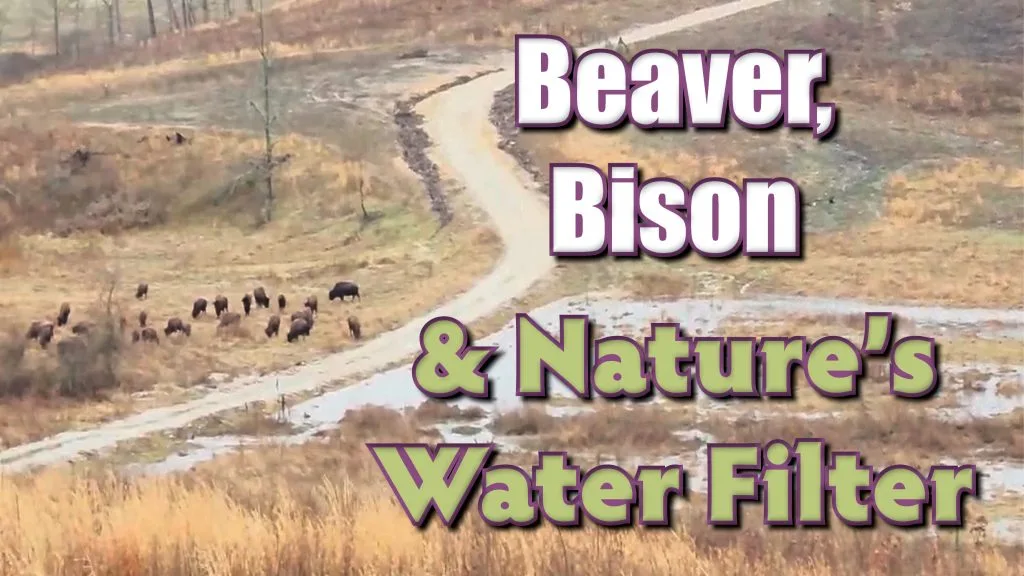
In this video, Colt Hamilton explores a native Ozark bottomland after a soaking rain to demonstrate how healthy streams likely functioned for thousands of years. Instead of a single deep channel, floodwaters spread slowly across multiple shallow channels where native grasses and sedges filtered sediment, built rich soils, and improved water quality.
Colt also explains the important role beavers played by creating natural dams that raised groundwater levels, increased soil moisture, and produced resilient wetlands that benefited countless wildlife species. You’ll also see bison grazing native sedges and learn how their natural movement helped recycle nutrients from wet bottoms back to surrounding hillsides, creating a continuous cycle that strengthened the landscape.
Together, native plants, beavers, flowing water, and grazing animals formed an ecosystem that was remarkably efficient at conserving soil, storing water, and supporting abundant life. Understanding how these natural systems worked can help guide today’s conservation, restoration, and grazing practices.
If you enjoy learning about native grasslands, healthy watersheds, wildlife habitat, and regenerative land management, be sure to subscribe to Hamilton Native Outpost for more videos.