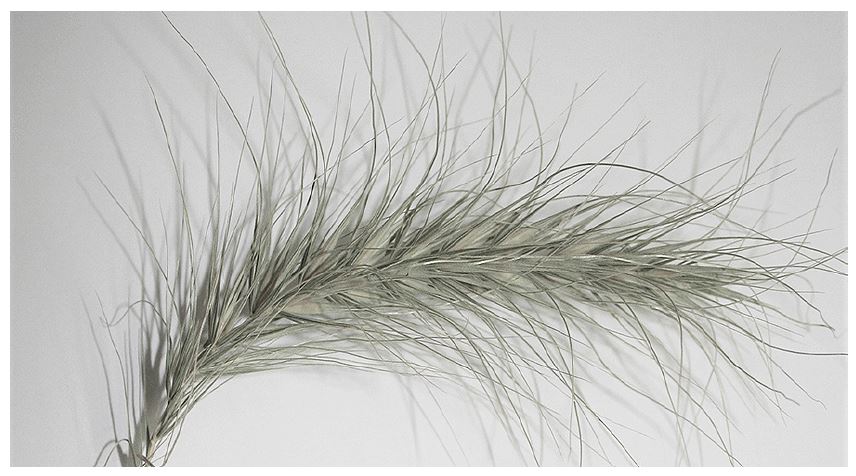

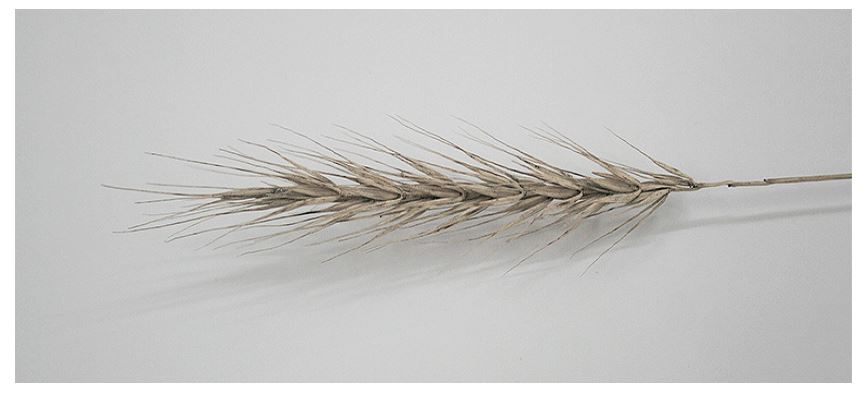
Early Wild Rye (Elymus macgregorii) Matures very early (usually completely brown by end of June in Missouri); Awns of indeterminate length; Seedhead looks like a “less robust” Southeast Wild Rye; Stems are weak and sometimes bend at nodes; Common in river or creek bottoms under trees, but in other upland locations as well.
Southeast Wild Rye (Elymus virginicus var. glabriflorus) Matures late (seedhead emerges around the end of June in Missouri); Seedhead is well above the flag leaf; Long awns; Usually found on uplands; Blue-green leaves; Whitish cast (glaucous) on stem below seedhead & also on sheath of flag leaf.
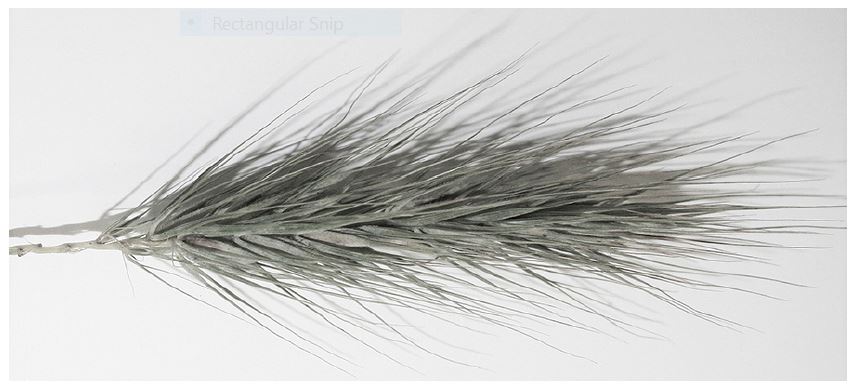
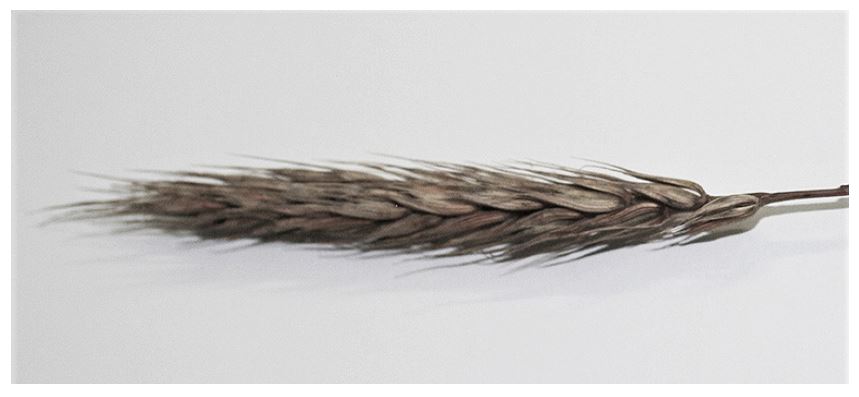
Jejunus Wild Rye (Elymus virginicus var. jejunus) Matures after Early Wild Rye, but before Virginia Wild Rye; Has a very long distance between the seedhead and the flag leaf; Short awns; When seedhead is looked at from above, it appears “pressed-in-a-book”, or slightly rectangular.
Virginia Wild Rye (Elymus virginicus var. virginicus) Matures late; Flag leaf usually at or on seedhead making it look like the seedhead didn’t fully emerge; Short awns; Often on low ground, but not always.
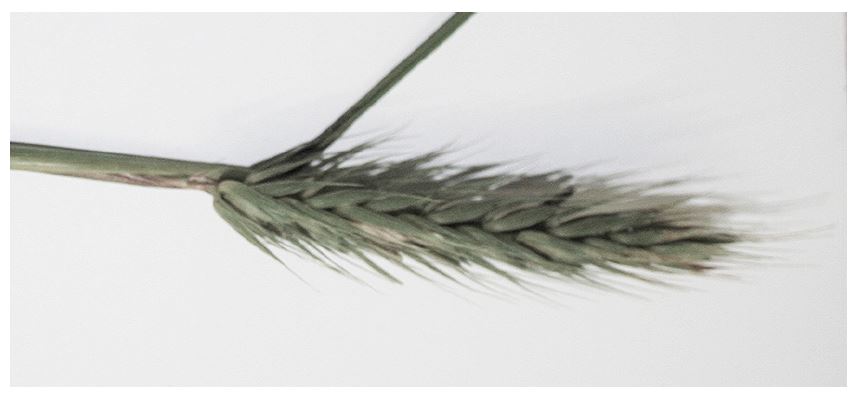
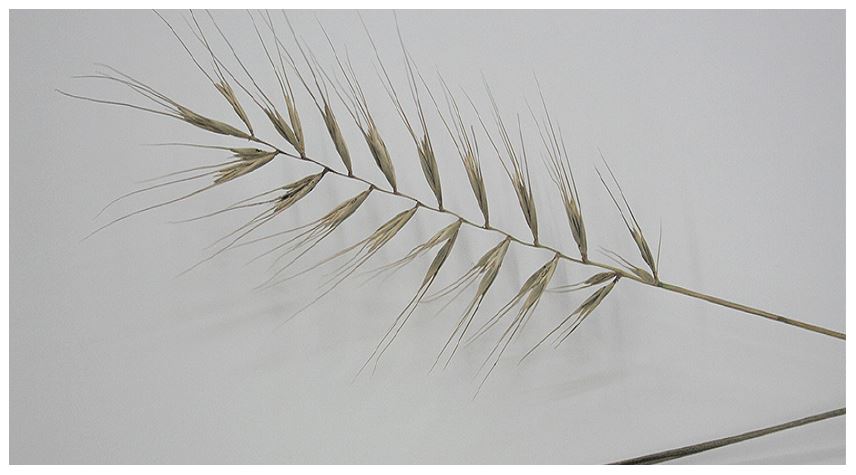
Bottlebrush Grass (Elymus hystrix) Long awns; Considerable space between seeds in seedhead; Seeds are almost perpendicular to the stem instead of pointing strongly upward.
Canada Wild Rye (Elymus canadensis) Matures late; Flag leaf well below seedhead; Long, recurved awns once seedhead is mature; Seedhead nods (Two other Wild Ryes also have nodding seedheads; Silky Wild Rye and Riverbank Wild Rye).