How do you know if native grass was grazed correctly? The answer often comes down to one simple — but critical — concept: growth points.
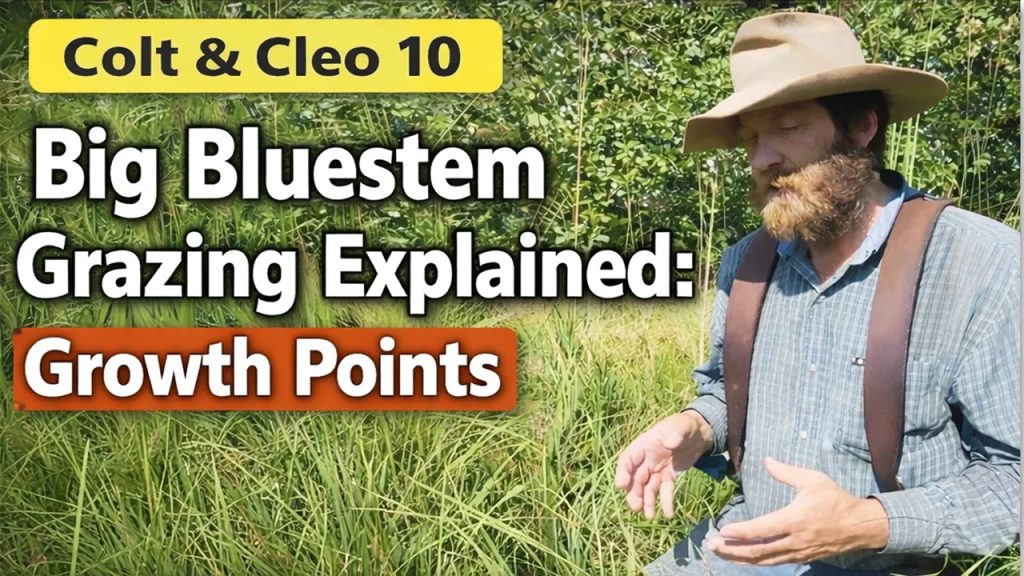
In this video, we’re out in a native grass pasture in mid-August, taking a close look at Big Bluestem (Andropogon gerardii) that has recently been grazed by cattle. We walk through where growth points are located, how grazing height affects regrowth, and why biting the plant too low can slow recovery by weeks. These are concepts that also apply to other Native Warm Season Grasses such as Switchgrass (Panicum virgatum), Eastern Gamagrass (Tripsacum dactyloides), and Indiangrass (Sorghastrum nutans).
Using a real Big Bluestem clump, we break down:
What a growth point actually is and why it matters
The difference between grazing vegetative leaves and seed stalks
How much leaf can be removed without slowing regrowth
Why grazing below the growth point forces the plant to “start over”
How timing and plant growth stage affect recovery in late summer
We also talk about why cattle prefer the most vegetative, highest-quality parts of the plant, and why forcing them to graze lower or into seed stalks can reduce forage quality and delay pasture recovery.
This practical, hands-on explanation helps connect plant biology with grazing decisions — so you can better manage regrowth, forage quality, and long-term grassland health.